
They loved their country and each other, but one of them would be executed just hours after marrying. Samantha Bailie recalls their doomed love story .
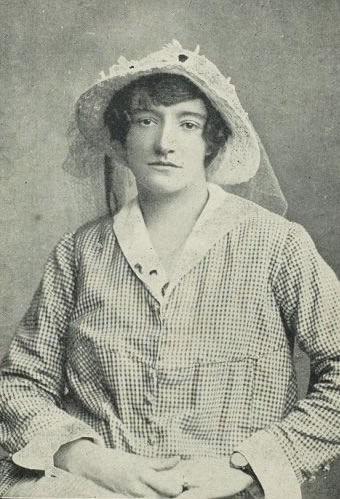
Grace Gifford was born 4 March 1888 to parents Frederick (a Catholic solicitor) and Isabella (a Protestant). The second youngest of 12 kids, the family lived a comfortable existence in the upmarket area of Rathmines. The children were raised as Protestants. At the age of 16, the young Grace attended the Dublin Metropolitan School of Art where she was considered to be one of the most talented students to attend the school and so won a place to study art for a year in the U.K.
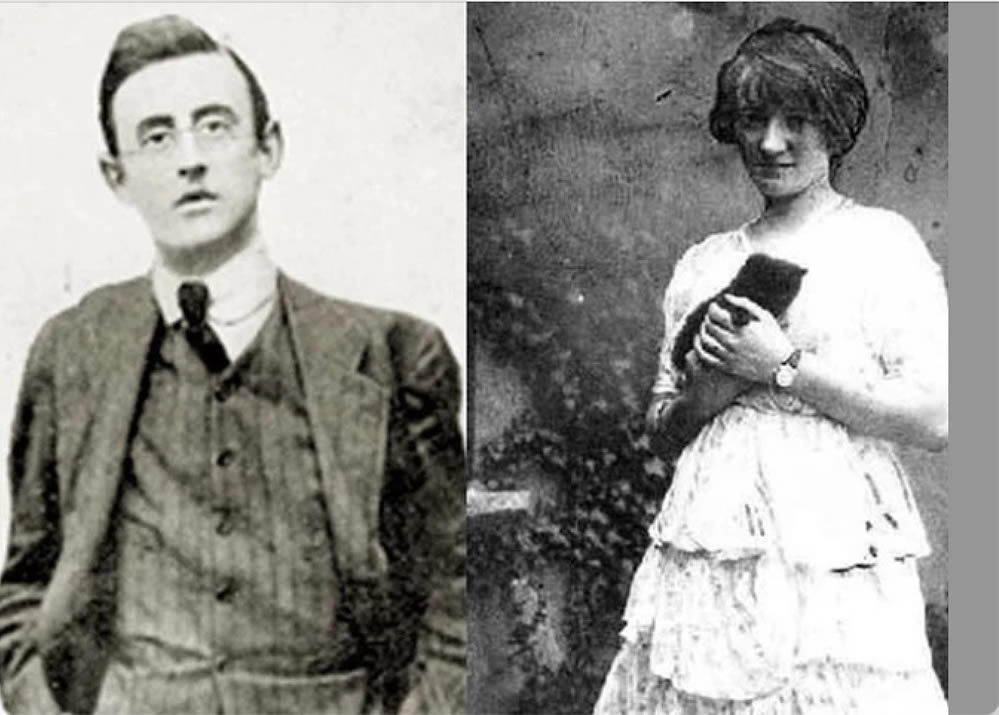
Grace returned to Dublin in 1908 and found that she had no means of earning money, as there was little call for her work anywhere. She had her heart set on being a successful caricaturist and toyed with the notion of emigrating, but could not bring herself to leave her beloved Ireland again. Dismayed, she sent a selection of her drawings to various magazines, where she enjoyed some success but earned very little money. Grace enjoyed social gatherings and enjoyed watching people, so garnering inspiration for her drawings, and it was at one of these gatherings that she met Joseph Plunkett, the man she would later have a tragic love affair with. (Thomas MacDonagh introduced Grace to Joseph, as Grace was his wife Muriel’s sister).
Joseph Plunkett was born 21 November 1887 into a similar background to Grace – the affluent Upper Fitzwilliam Street. Despite being relatively wealthy, the young Joseph had a difficult childhood as he suffered from tuberculosis, an illness that would become a lifelong burden. The young Plunkett spent great chunks of his youth in the Mediterranean where the climate better suited his condition. Throughout Plunkett’s life, whether abroad or at home, he was fixated by Irish heritage and the Irish language, and studied both frequently. He also battled through health problems to obtain a degree in Philosophy from UCD.
He joined the Gaelic League and began studying with Thomas MacDonagh, the man who would be his lifelong best friend and fellow member of the Irish Volunteers. Many members of his family shared Plunkett’s interest in nationalism, and his father allowed his property in south Dublin to be used as a training camp for young men who wished to escape conscription in England during WW1 and who would instead be trained to fight for Ireland. Joseph joined the Irish Republican Brotherhood and was sent to Germany to discuss potential German aid for an uprising the following year. A shipment of arms, which he was promised would arrive on schedule.
Grace was quite smitten by Joseph from the outset, she loved the passion that burned in his chest for their country,
she loved his strong religious beliefs and so she accepted his marriage proposal in 1915. Joseph was madly in love with Grace; he loved her hunger for knowledge and her ever increasing drive for the movement, he so vehemently believed in. They both knew they couldn’t live without each other and talked of their dreams for themselves and Ireland with great optimism.
Grace decided she would like to take religious instruction before the wedding and was formally received into the Catholic Church in April 1916. She and Joseph set their wedding date for Easter Sunday but her parents were fuming with anger. They couldn’t believe their daughter would marry a man who would not be able to take care of her properly (Joseph was in ill-health).
Grace and her sister Muriel knew the Rising was planned but neither of them knew the date as Joseph and Thomas refused to tell them. Both sisters were anxious but still Grace was inwardly excited that Joseph would be her husband soon. She dreamt of their home, their children and the lives they would lead and did her best to halt her thoughts as they drifted towards the potential dangers her intended faced.
When the Rising started, Nellie Gifford (Grace and Muriel’s sister) was in the GPO with other women from the Cumann na mBan, Joseph Plunkett, Thomas MacDonagh and other Irish soldiers, whilst Grace and Muriel ate lunch in a hotel. As the days passed and the Rising neared its end Joseph Plunkett took a ring from his finger and a letter from his pocket and handed it to Winifred Carney to deliver to his fiancé, as he feared he would not make it to her safely.
Even as the room burst into flames, Joseph and his brothers George and John continued to fight shoulder to shoulder in the GPO. After a failed attempt to cross Moore Street the men came up with a plan: they constructed a barricade by pushing a truck across the road to give them some protection from the machine gun fire. Joseph’s health was decreasing rapidly, but he summoned up enough strength to help and to get across the road without harm.
On 29 April the Irish soldiers surrendered – the Easter Rising was over. The men all marched to a holding spot in Parnell Street and spent the night in freezing conditions, lying on a freezing cold floor, guarded by a British officer. Joseph Plunkett felt his spirit could sink no lower – his country was dominated by British rule, his plans had failed and he feared he may never see the one woman he had given his heart to – Grace, the girl who made everything worthwhile.
The next day they were marched to Richmond Barracks. Joseph Plunkett was tried by Court Martial on 2 May and transferred to Kilmainham Jail where he was sentenced to death. Winifred Carney and many of the women involved were in the holding cell above and Joseph managed to get a letter to Winifred who was able to get the letter smuggled out to Grace.
Grace and Joseph held each other, the dreams of their life together quickly disappearing…
Grace Gifford was heart-broken – she knew her dreams and Joseph’s were now dead, but Joseph asked her if she would marry him in the prison chapel anyway as he wanted to go to his grave knowing she was his wife. The prison chaplain quickly performed the ceremony and Joseph was dragged from Grace’s arms by a prison guard and taken back to his cell. Grace was visibly shaken and stunned by the whole experience and was escorted home afterwards by a priest.
The new bride was not long in bed when there was a knock at her door (at 2 am) – it was a policeman – he told her she could have ten minutes with her husband as he would be put to death that day. Grace and Joseph held each other, the dreams of their life together quickly disappearing as the ten minutes evaporated into the chamber of time.
As he was led to the yard for execution, he said to the priest who accompanied him, “Father I am happy I am dying for the glory of God and honour of Ireland.” He was then shot dead by firing squad and his body dumped in the pit in Arbour Hill.
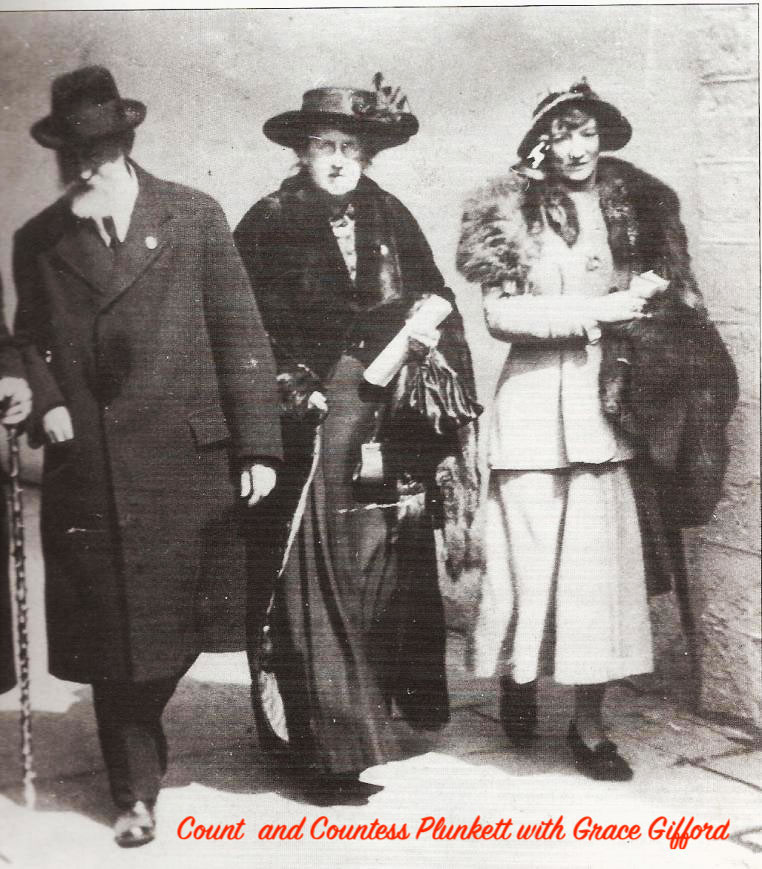
Grace’s in-laws refused to honour her husband's will, in which he left everything to his widow
Legally, the will was invalid because there was only one witness (the law requires two) and also the marriage took place after the will was made, automatically revoking it. For years Grace received nothing, so she began legal proceedings against her mother- and father-in-law, Count George Noble Plunkett and his wife in 1934. The Count and Countess Plunkett settled out of court.
Grace was paid £700, plus costs.
Grace Gifford Plunkett died suddenly, and alone, on 13 December 1955 in an apartment in South Richmond Street. Her body was removed to St Kevin’s Church, Harrington Street and among the attendees at her funeral was President Seán T. O'Kelly. She was buried with full military honours in Glasnevin Cemetery.

Sites linking to this page have chosen to adopt this Privacy Policy as their own. This means: they agree to abide by the principles laid out below.
In common with other websites, log files are stored on the web server saving details such as the visitor's IP address, browser type, referring page and time of visit.
Cookies may be used to remember visitor preferences when interacting with the website. Where registration is required, the visitor's email and a username will be stored on the server.
The information is used to enhance the visitor's experience when using the website to display personalised content and possibly advertising.
Email addresses will not be sold, rented or leased to 3rd parties. Email may be sent to inform you of news of our services or offers by us or our affiliates.
If you have subscribed to one of our services, you may unsubscribe by following the instructions which were included in the email that you received.
You can block cookies via your browser settings but this may prevent you from accessing certain features of the website.
Cookies are small digital signature files that are stored by your web browser that allow your preferences to be recorded when visiting the website. Cookies are used by most websites to record visitor preferences. Also they may be used to track your return visits to the website.
Like all sites, we use 3rd party tools to help us run the website. They are used not to track you but to track info like the visitors numbers on the site over a given period, to allow you to interact with the social-media widget and to allow us to login into this web based CMS (Content Management System).